
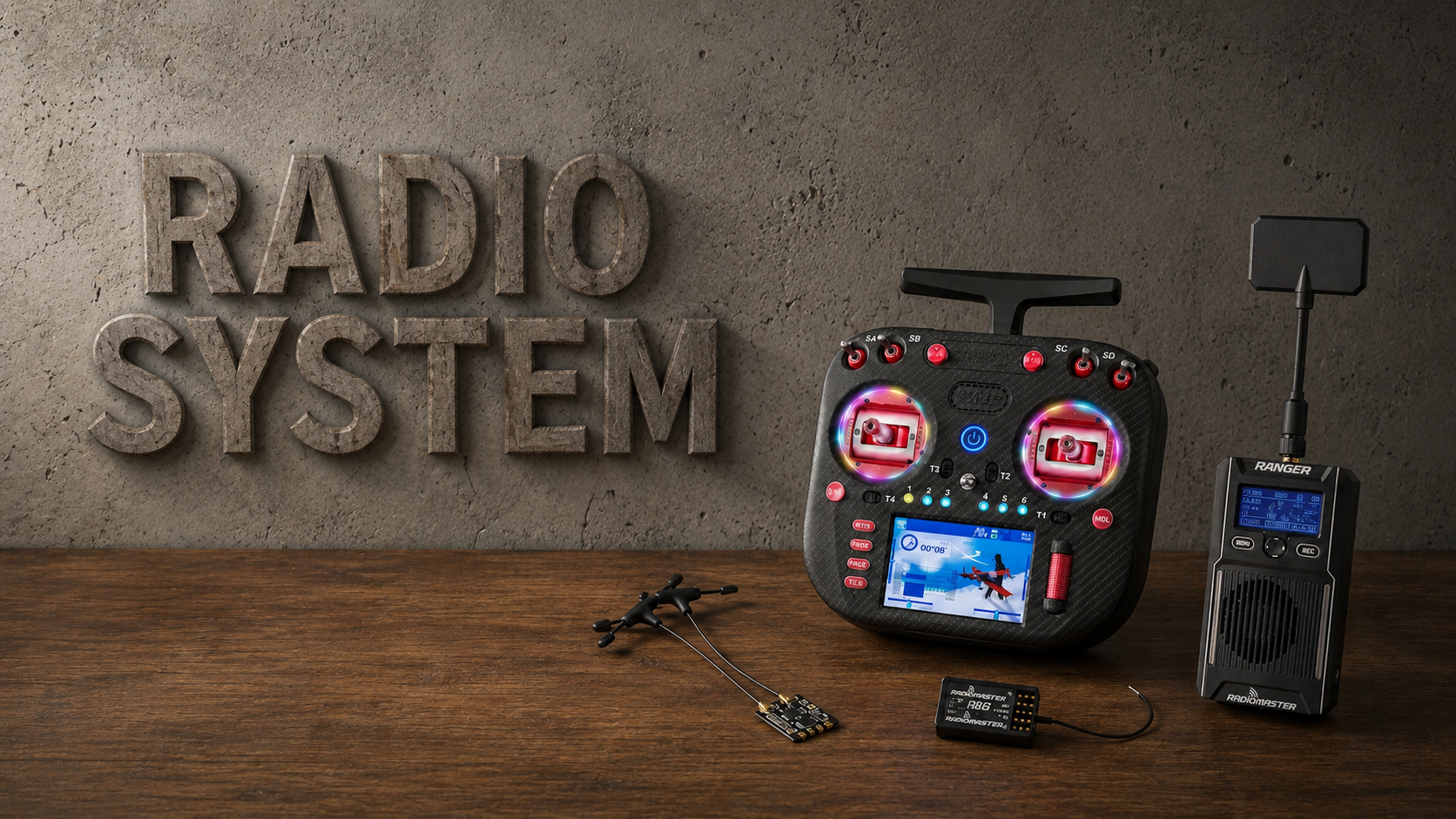
Every radio-controlled (RC) aircraft, whether it’s an FPV drone, fixed-wing airplane, helicopter, or VTOL platform, relies on one essential system to establish communication between the pilot and the aircraft—the RC radio system. It serves as the primary link that allows the pilot to control the aircraft safely and accurately throughout the flight.
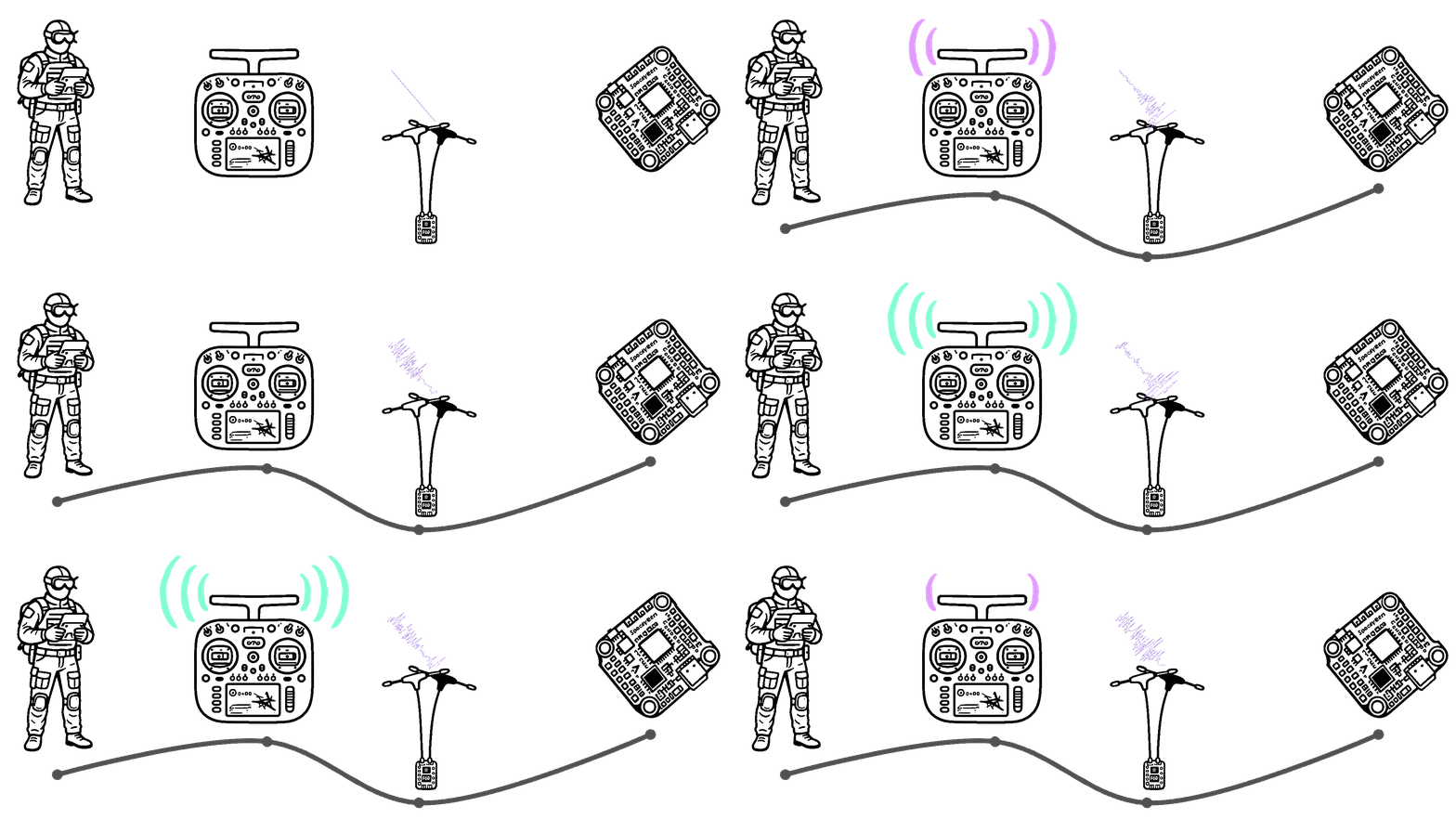
Whenever you move a control stick on your transmitter, your inputs are converted into radio signals and transmitted wirelessly to the onboard receiver. The receiver then passes these commands to the flight controller or directly to the servos, allowing the aircraft to respond almost instantly. A reliable RC radio system is therefore essential for maintaining precise control and ensuring safe flight.
Modern RC radio systems have evolved from simple analog communication to advanced digital protocols that offer longer range, lower latency, improved interference resistance, and real-time telemetry. Understanding how these systems work is the first step toward choosing the right radio system for your aircraft and flying requirements.
The Communication Flow
Although the communication process happens almost instantly, several components work together to transmit the operator’s commands to the aircraft.
Radio Transmitter
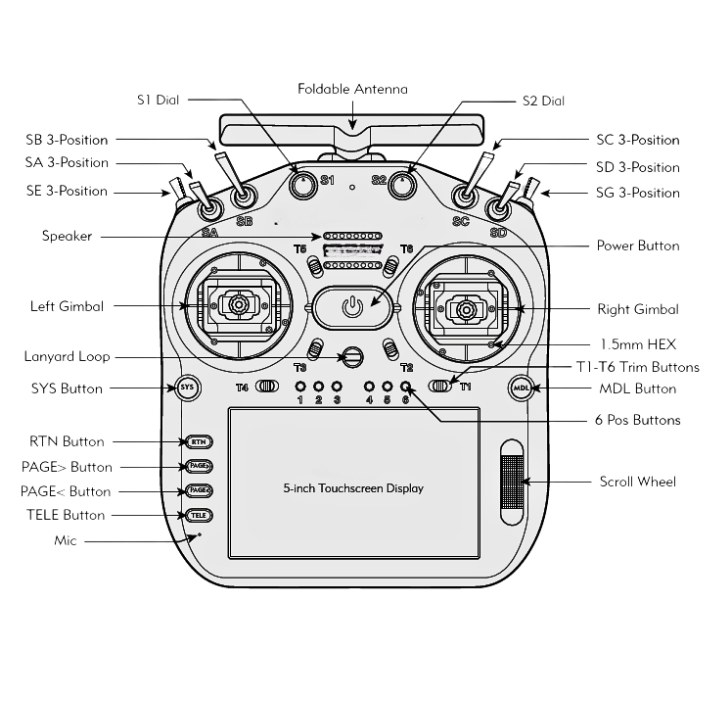
The radio transmitter is the primary interface between the pilot and the aircraft. It allows the pilot to send control inputs while also providing access to various settings, flight modes, telemetry information, and communication options. Modern transmitters include several hardware components, each designed to perform a specific function.
Gimbals
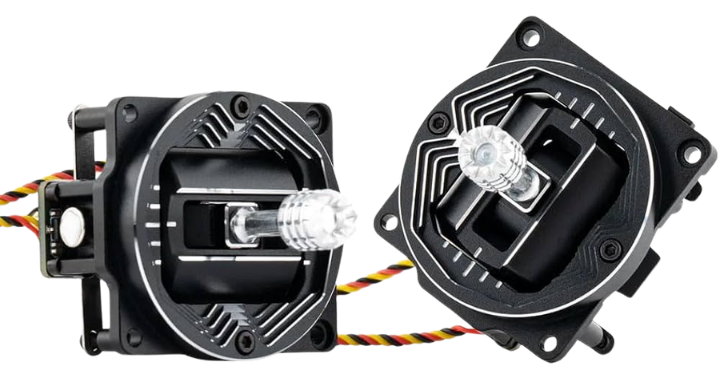
Gimbals are the two control sticks on a radio transmitter used to control an aircraft. Each gimbal moves along two axes, providing control over the four primary flight functions: Throttle, Yaw, Pitch, and Roll.
Most modern transmitters are equipped with Hall-effect gimbals, which use magnetic sensors instead of traditional potentiometers. They offer smoother stick movement, greater precision, improved durability, and require less maintenance, making them the preferred choice for today’s RC pilots.
Channels
A channel is an individual control signal transmitted from the radio transmitter to the receiver. Each channel is assigned to a specific function, allowing the pilot to control different aspects of the aircraft independently.
In most RC aircraft, the first four channels are used for the primary flight controls:
- Channel 1 – Roll (Aileron)
- Channel 2 – Pitch (Elevator)
- Channel 3 – Throttle
- Channel 4 – Yaw (Rudder)
- Channel 5 and above – Auxiliary Functions
Additional channels are used for auxiliary functions such as flight mode selection, arming, camera control, landing gear, GPS Rescue, lights, payload release, and other customizable features.
The total number of channels available on a transmitter determines how many independent functions can be controlled. For example, a 6-channel transmitter can control six separate functions, while a 16-channel transmitter provides greater flexibility for more advanced aircraft and applications.
Switches, Rotary Knobs & Sliders
Modern RC transmitters include more than just the control sticks. They also feature switches, rotary knobs, and sliders that allow the pilot to control additional aircraft functions during flight.
Switches
Switches are used to turn functions on or off or to switch between different flight modes. Most transmitters include 2-position, 3-position, and momentary switches.
They are commonly used for:
- Arming and disarming the aircraft
- Changing flight modes
- Activating GPS Rescue
- Turning the buzzer on
- Controlling lights or other accessories
Rotary Knobs
Rotary knobs can be turned smoothly, making them ideal for functions that require gradual adjustments instead of simple on/off control.
They are commonly used for:
- Camera gimbal control
- Servo position adjustment
- Camera zoom or focus
- Gain adjustment
Sliders
Sliders work similarly to rotary knobs but move in a straight line. They also provide smooth and precise control over different aircraft functions.
They are commonly used for:
- Camera tilt
- Servo control
- Payload release
- Other auxiliary functions

Add a Comment